There is plenty of advice online about how to choose a roof tent manufacturer—compare prices, check ...
There is no single roof tent that works equally well in every market. Local vehicles, climate, infra...
There is plenty of advice online about how to choose a roof tent manufacturer—compare prices, check certifications, inspect factories and test samples. Most of it is useful, but also generic.
After more than 12 years in the roof tent business, we believe there is a more important question to ask first:
What kind of manufacturing partner is right for your business?
Choosing a manufacturer is a little like choosing a life partner. It is not simply about finding the biggest, cheapest or most impressive one. What matters is whether the two sides are a good fit.
The right roof tent manufacturer should match your market position, quality expectations, budget, growth stage and long-term business strategy.
So before comparing factories, start by understanding your own business.
Some companies are building brands for the long term. Others are looking for short-term opportunities where price matters more.
Both exist in the market, but they need different manufacturing partners.
If you are building a long-term brand, the quotation is only part of the real cost. Product consistency, warranty claims, delivery reliability and how a supplier responds when something goes wrong can matter just as much.
At WAYPARK, we chose the long-term path ourselves. We would rather grow steadily with customers than simply win the next order.
That also means we may not be the right factory for every buyer—and that is okay.
Before choosing a factory, decide whether your products are intended for the value, mid-range or premium market.
This matters more than it may initially appear.
In practice, a factory cannot effectively operate at both the high-end and low-end of the market under the same manufacturing system. The two segments require different materials, components, quality standards and production controls. Mixing them within one system can create confusion in sourcing, production and quality management.
When we entered the roof tent industry more than 12 years ago, we saw that the strongest established markets were mainly in Western countries and South Africa, where customers expected more than an attractive price—they also cared about reliability, usability and long-term product performance.
That gradually shaped our own position:
Mid-range pricing with mid-to-premium quality.
It is not the right positioning for every business. But it is the market we understand and the manufacturing system we have built around.
MOQ can determine whether a product opportunity is commercially realistic.
Some roof tent factories prefer container-scale orders. Others may start from 20 units or less. Large MOQs can improve manufacturing efficiency, but they also increase inventory commitment and the risk of testing a new product or market.
Over the past five years, through discussions with customers and industry peers, we have observed an interesting shift: a number of smaller brands specializing in roof tents have grown rapidly, while some established outdoor brands have continued losing ground in the roof tent category.
We believe specialization is part of the reason. Smaller roof tent brands can often stay closer to their customers, respond faster to feedback and put more attention into a relatively specialized product like a roof tent.
We have watched several of our own customers start small and become much larger businesses.
That experience changed the way we think about MOQ.
For selected existing models, we start from 5 units, with basic branding available. As the business grows, deeper private-label customization can grow with it.
The important question is not whether an MOQ is high or low.
It is whether the MOQ makes sense for your stage of business.
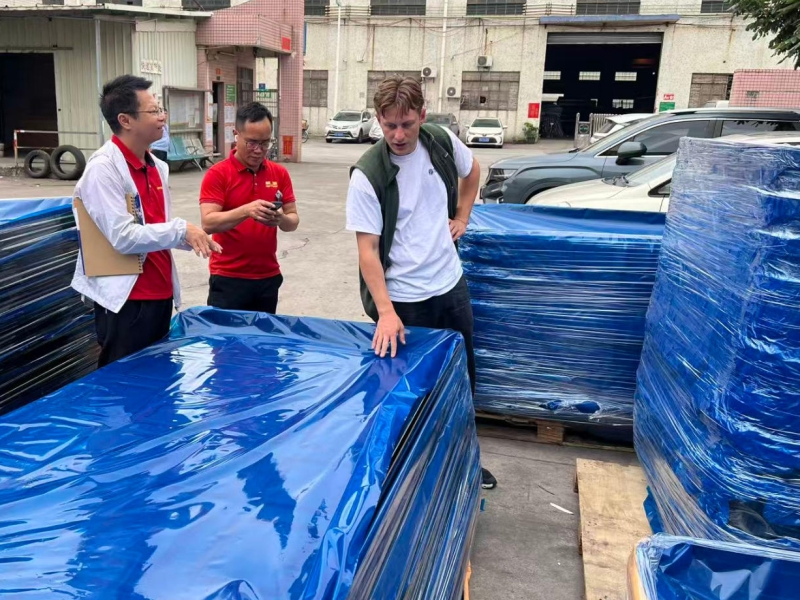
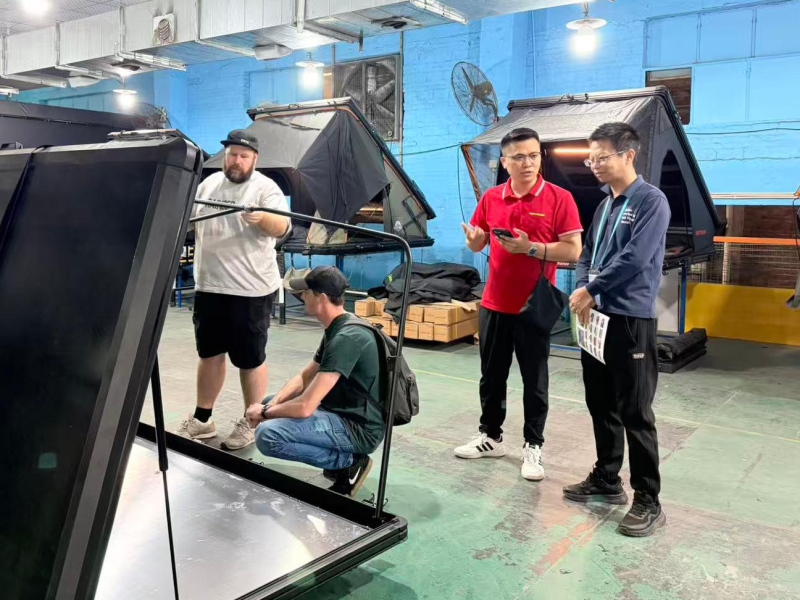
Once you know what you need, it is time to look inside the factory.
Do not only look at the showroom or the finished sample.
Look at how the roof tents are actually made.
How are materials controlled? How are sewing and assembly managed? What happens when a quality problem is discovered? Can a product be traced back through production? Can the engineering team improve a design when something does not work as expected?
For OEM and ODM projects, there is another useful question:
Can this factory actually solve problems, or can it only customize logos, colors and packaging?
And pay particular attention to mass production.
A beautiful sample tells you that a factory can make one good roof tent.
The real challenge is making the 100th tent as consistently as the first.
Of course price matters. Every brand needs enough margin to survive and grow.
But purchase price is only one part of the equation.
Lead time, packaging, container efficiency, spare parts, communication, consistency and after-sales support all affect the real cost of bringing a roof tent to market.
Sometimes the cheaper quotation really is the better choice.
Sometimes it becomes the more expensive choice later.
That is why we would not suggest choosing a roof tent manufacturer simply because someone tells you it is “the best.”
Instead, ask:
Does this factory understand the market I want to serve?
Does its quality level match my brand?
Does its MOQ fit my current size?
Can it support me if my business grows?
And when problems happen—as they eventually do in manufacturing—can we solve them together?
If the answers are yes, you may have found something more valuable than the cheapest supplier.
You may have found the right manufacturing partner for your business.